
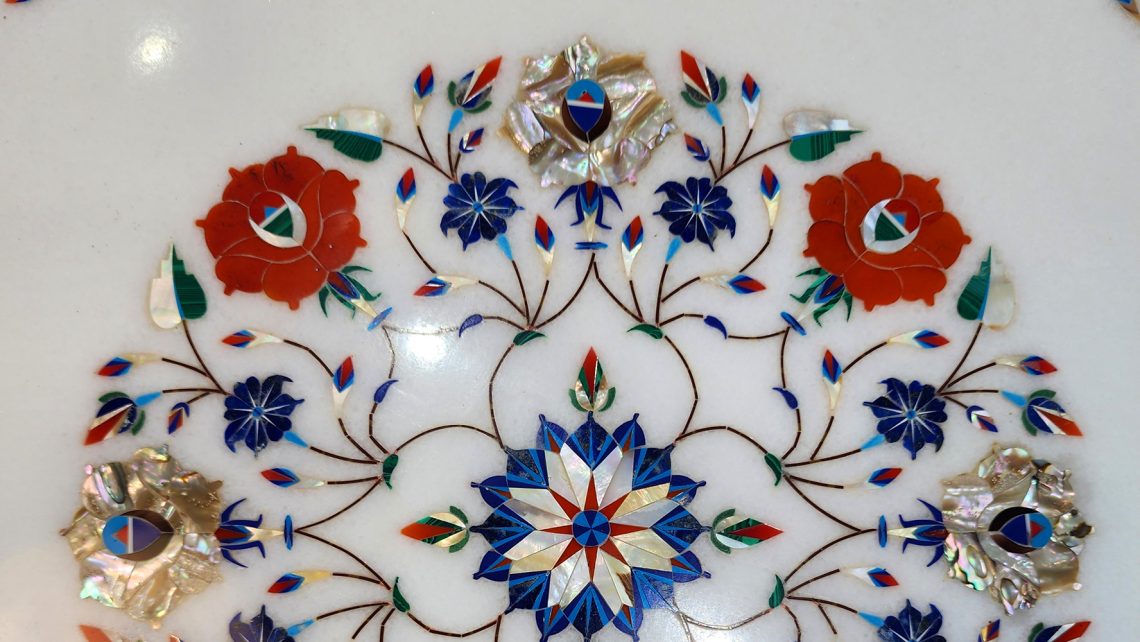
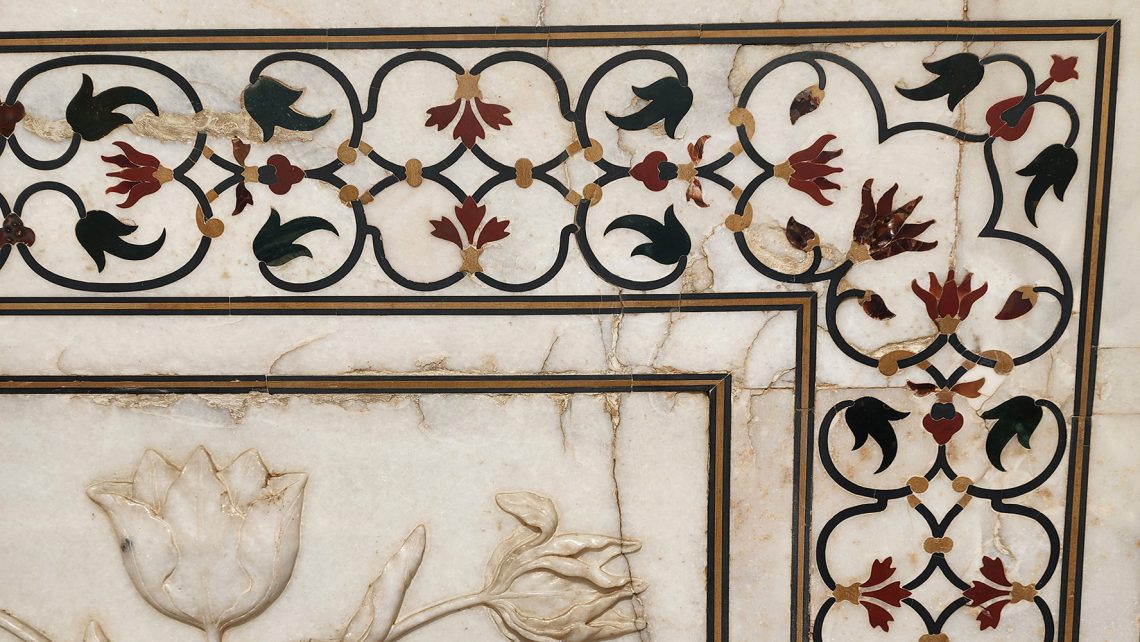
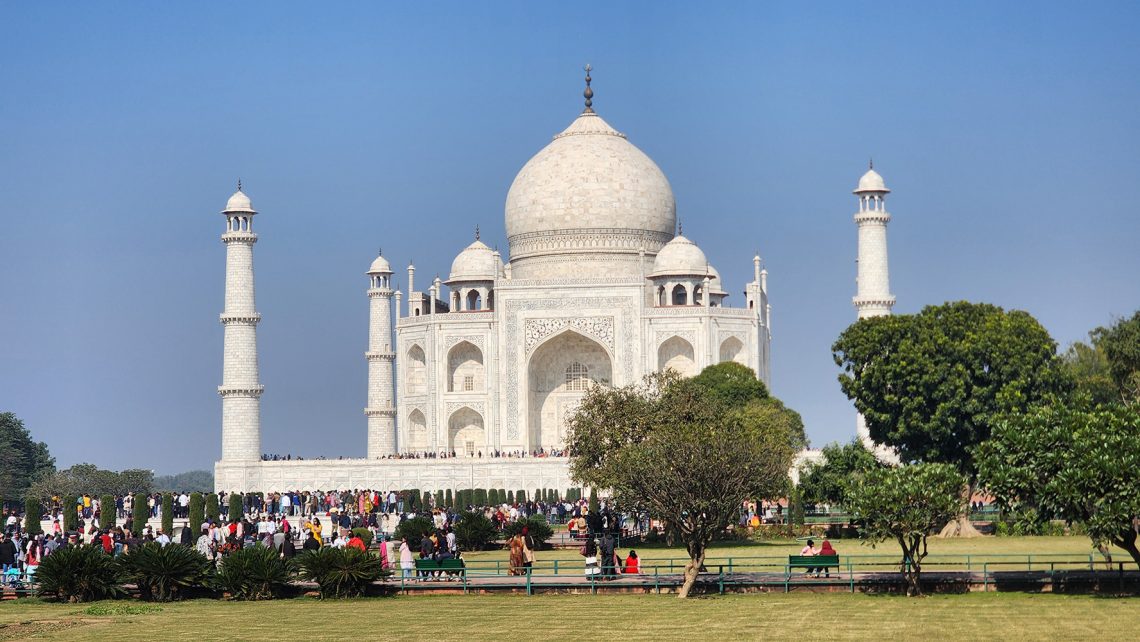
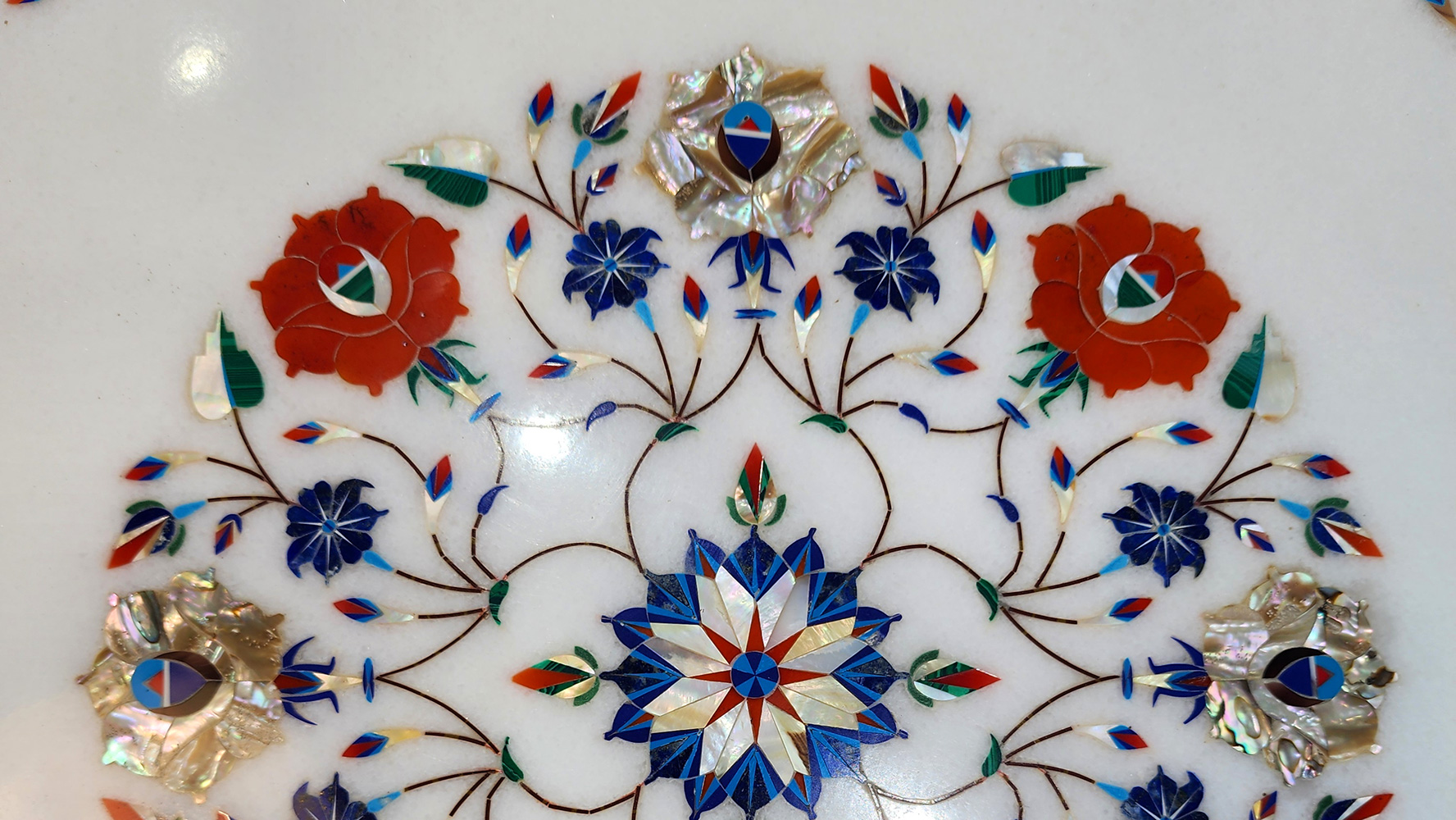
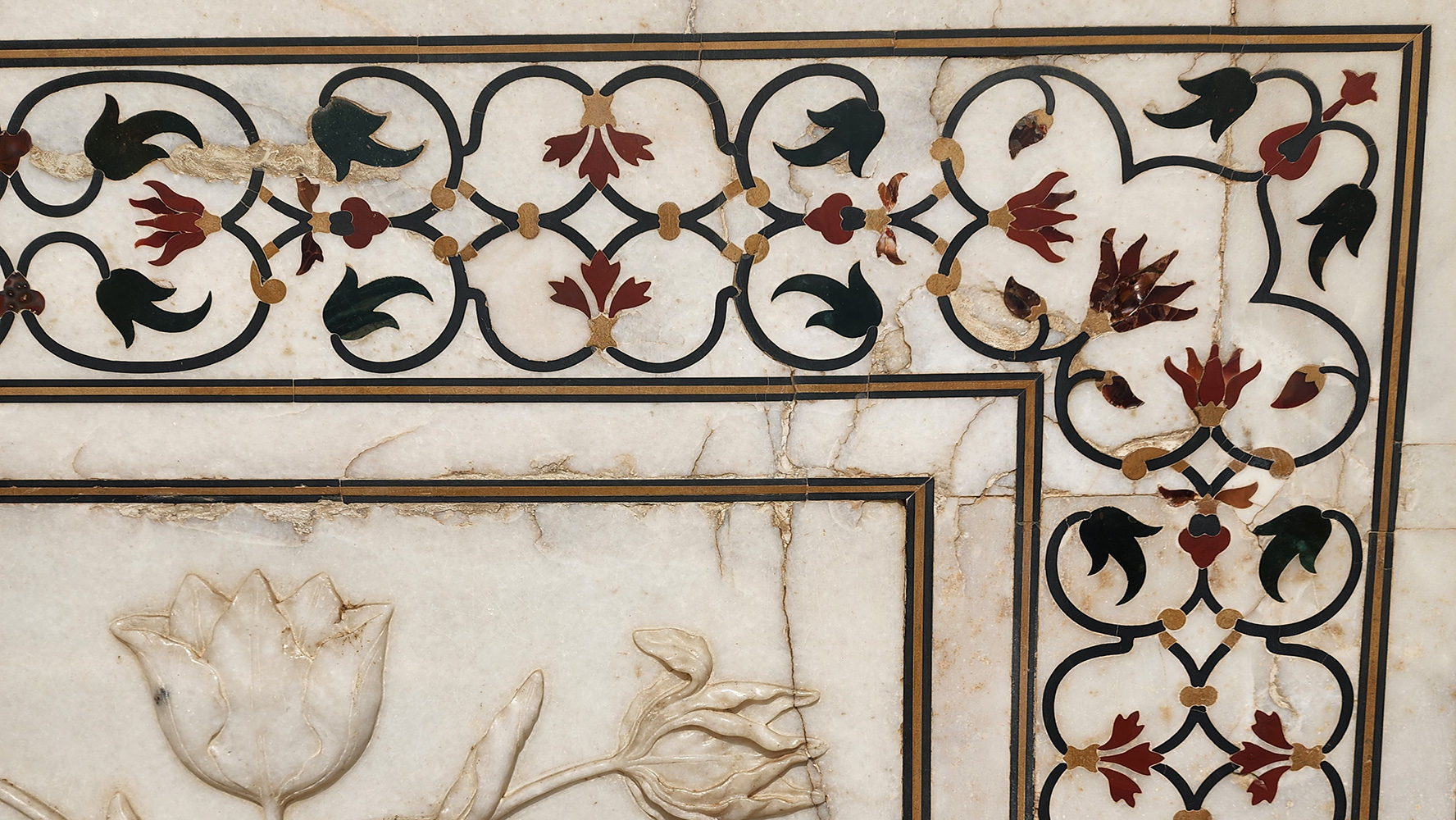
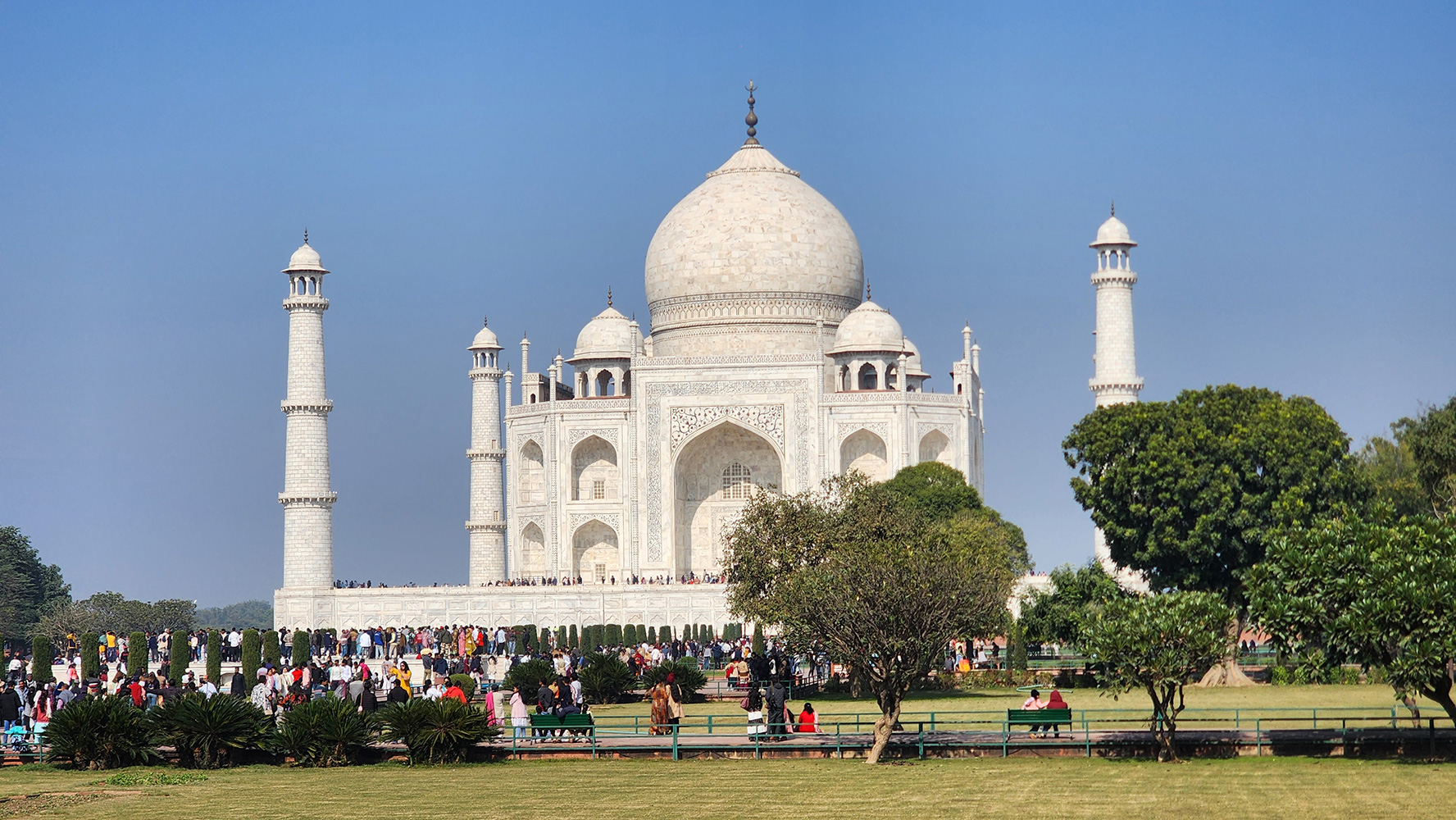
When you look at the magnificent Taj Mahal from afar, you see this mammoth architectural marvel gleaming in white, but as you approach it closer, you see colors embedded beautifully in this mausoleum. This beauty is the result of a very meticulous and tedious art called Pacchikari (also called Parchin Kari).
Introduction
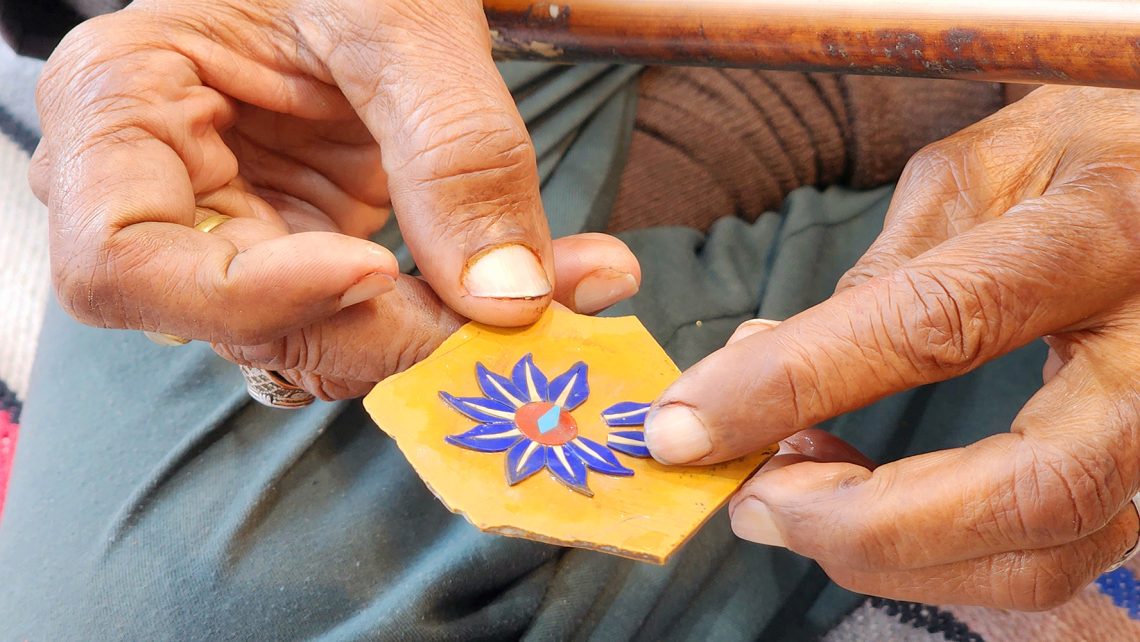
Pacchikari art involves engraving marble to make intricate designs, allowing exact space to fit in a well-carved stone into the created space after carving the stone as well to fit in PERFECTLY. We are talking about perfect precision with human hands. The designs usually are of flowers, vines, or even intricate geometric patterns. The origins of this art can be traced back to ancient Rome and Italy, but it thrived profusely in India under Mughal rule. Specialist craftsmen were brought from Persia and other places to train the Indian craftsmen, and over time, a local art form emerged. Royalty was defined through these art forms, which were extended to tables, chairs, buildings, jewelry boxes, vases, and a lot more. Known for its presence ornamenting the Taj Mahal, Pacchikari gradually became a distinct craft in Agra, with generations of local artisans and workshops carrying forward the art form, which is slowly dwindling although still appreciated immensely all around the world.
The process
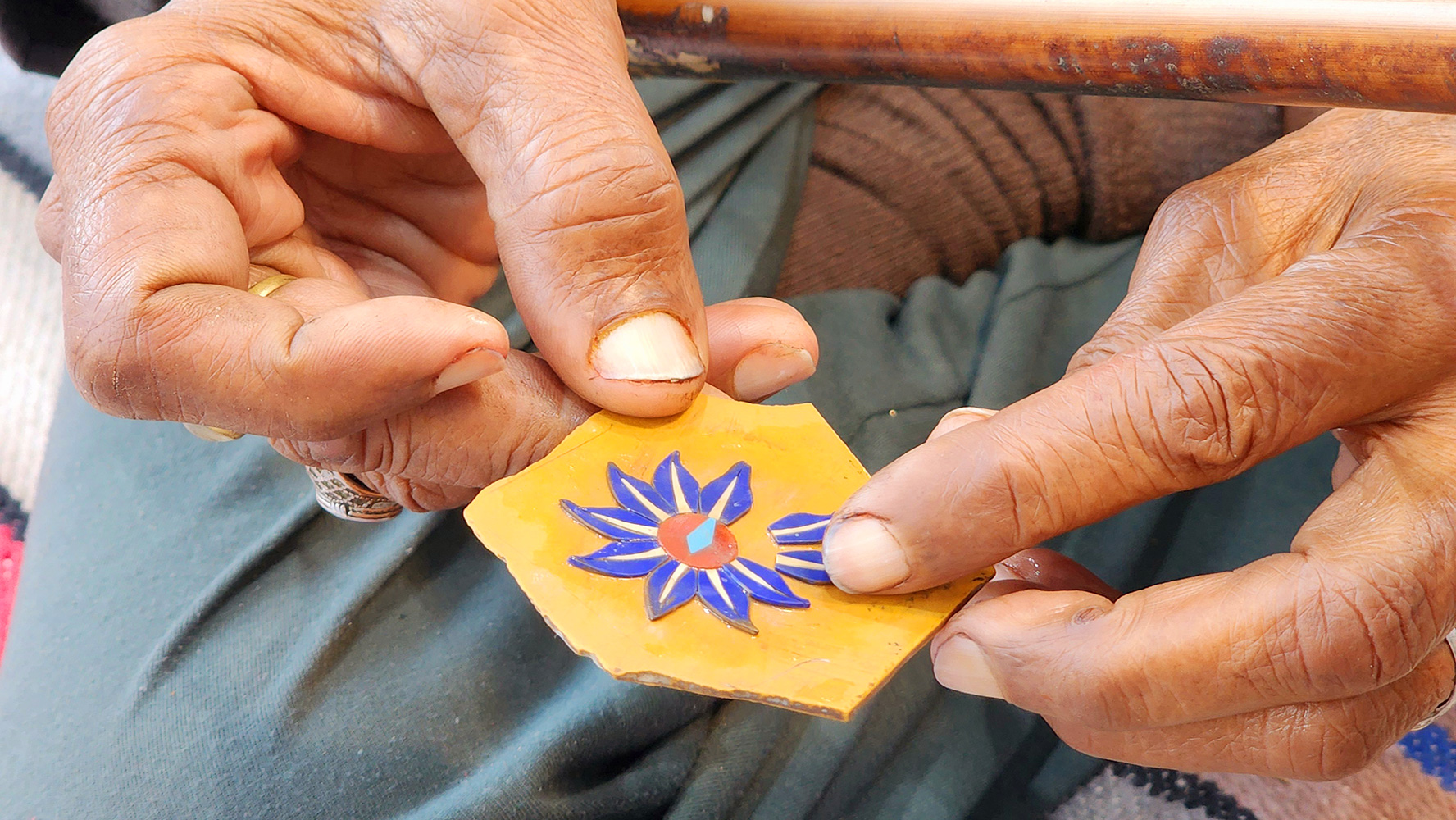
The art of Pacchikari involves inlaying semi-precious stones into white marble to create intricate floral and geometric designs. Following are the steps involved:
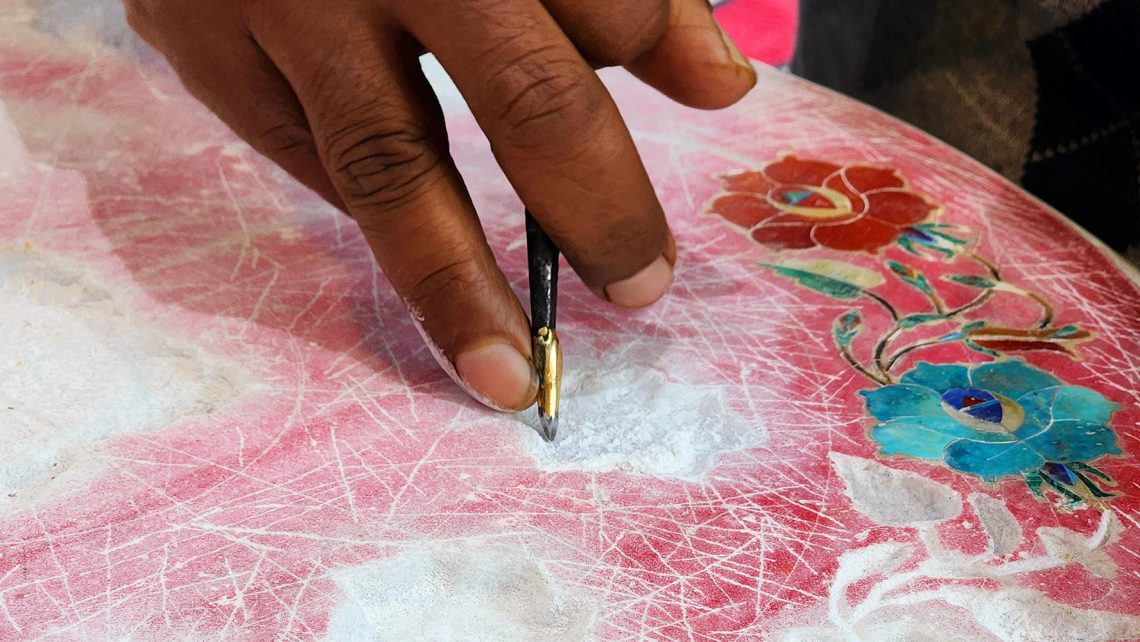
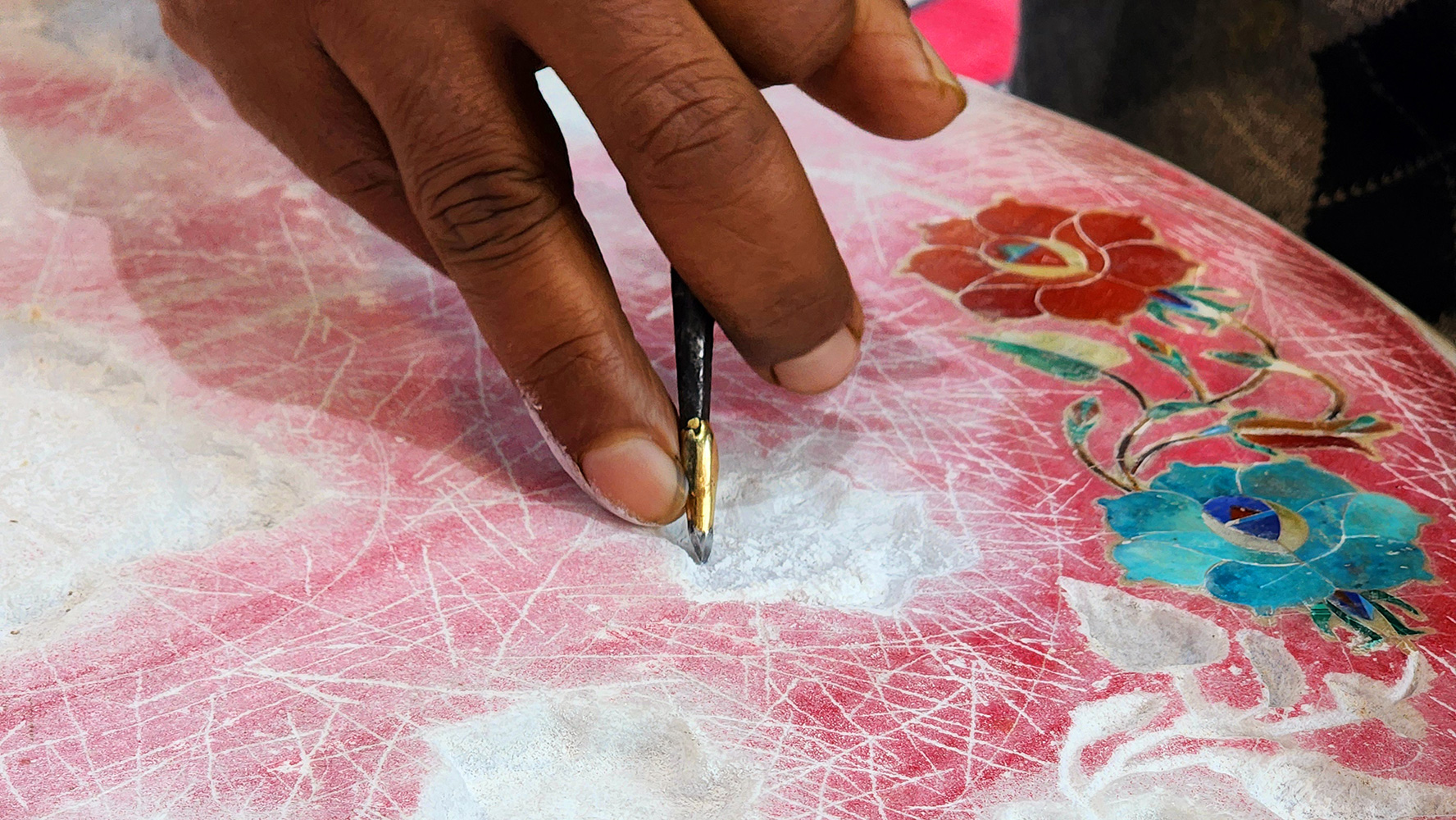
1. Designing: A very experienced craftsman sketches the design on the marble.
2. Carving: Chisels then follow the design lines to create shallow grooves.
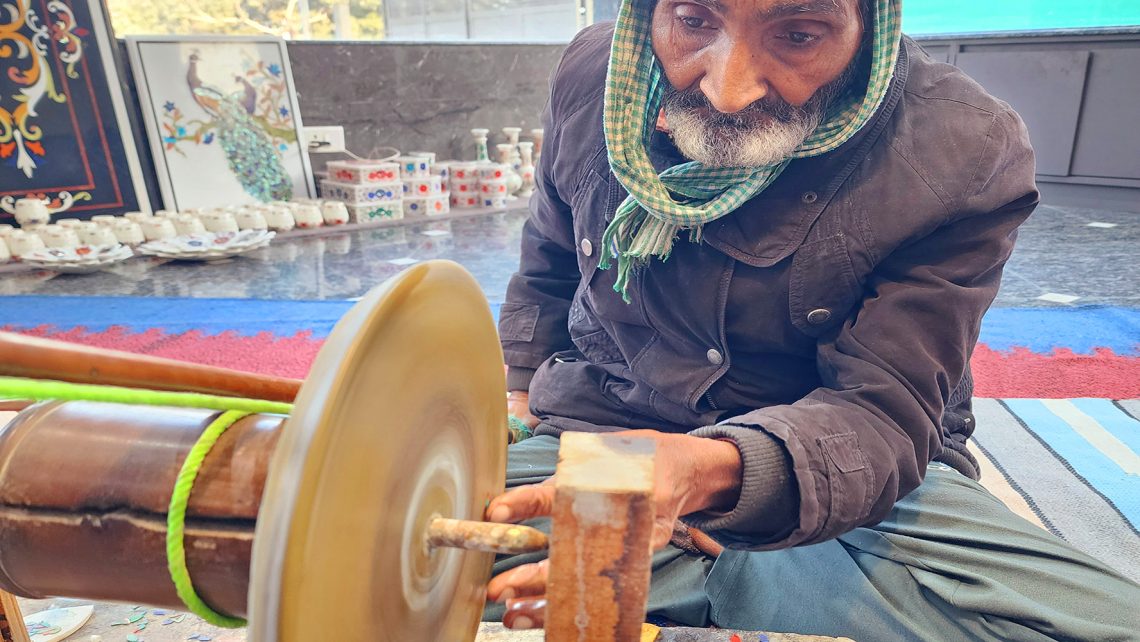
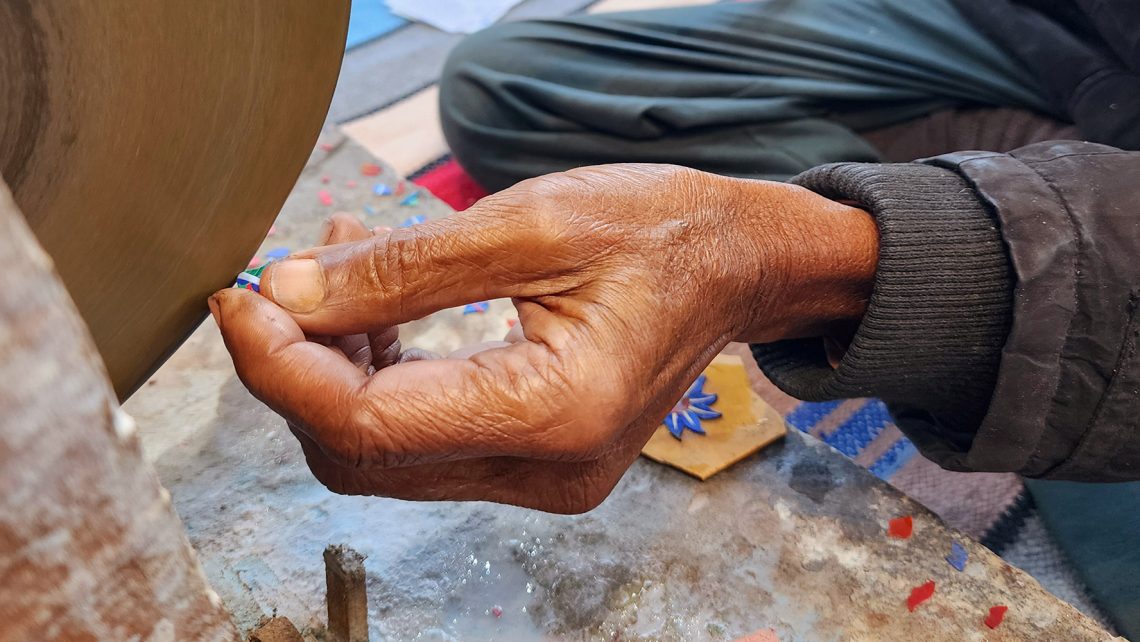
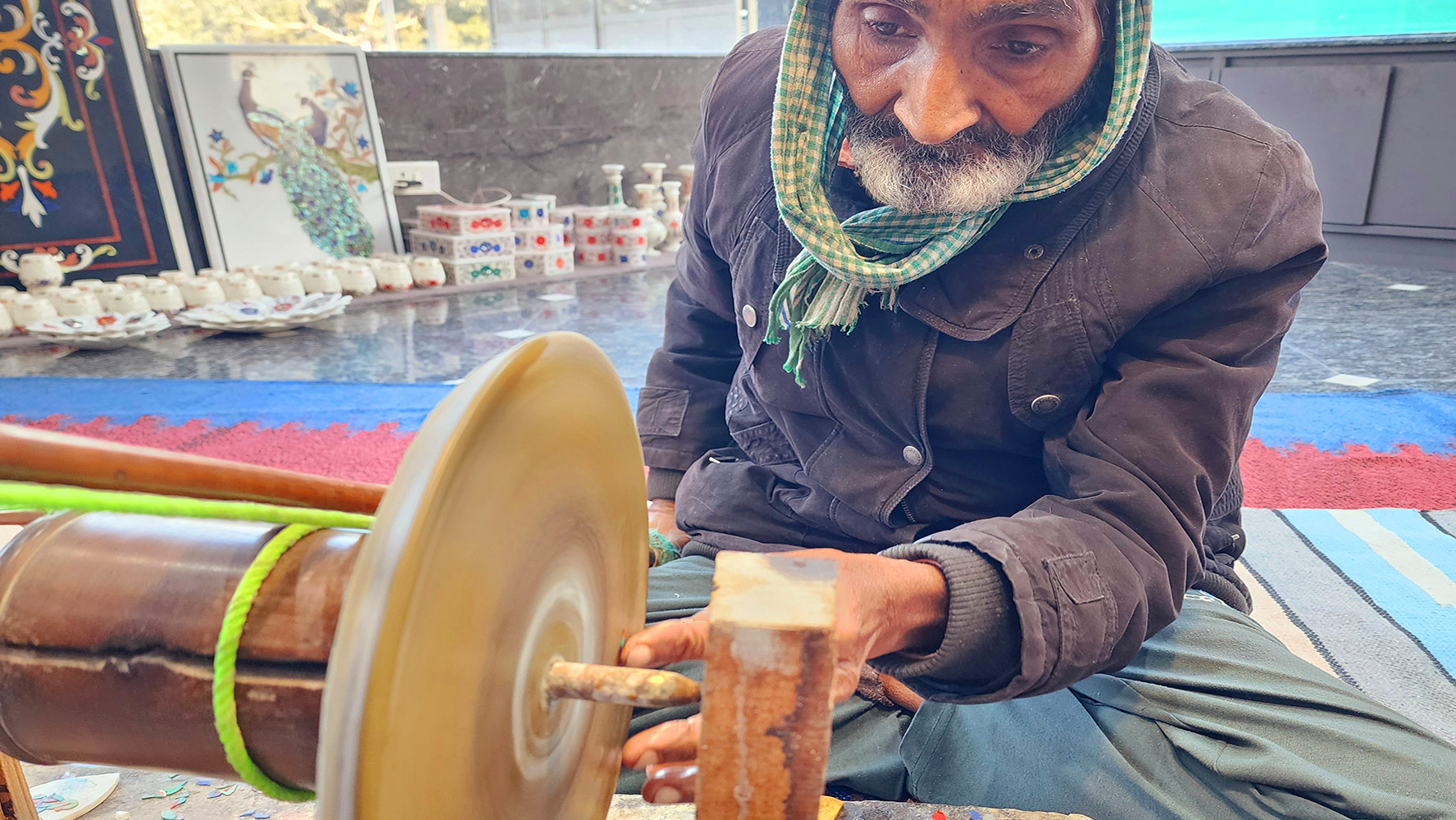
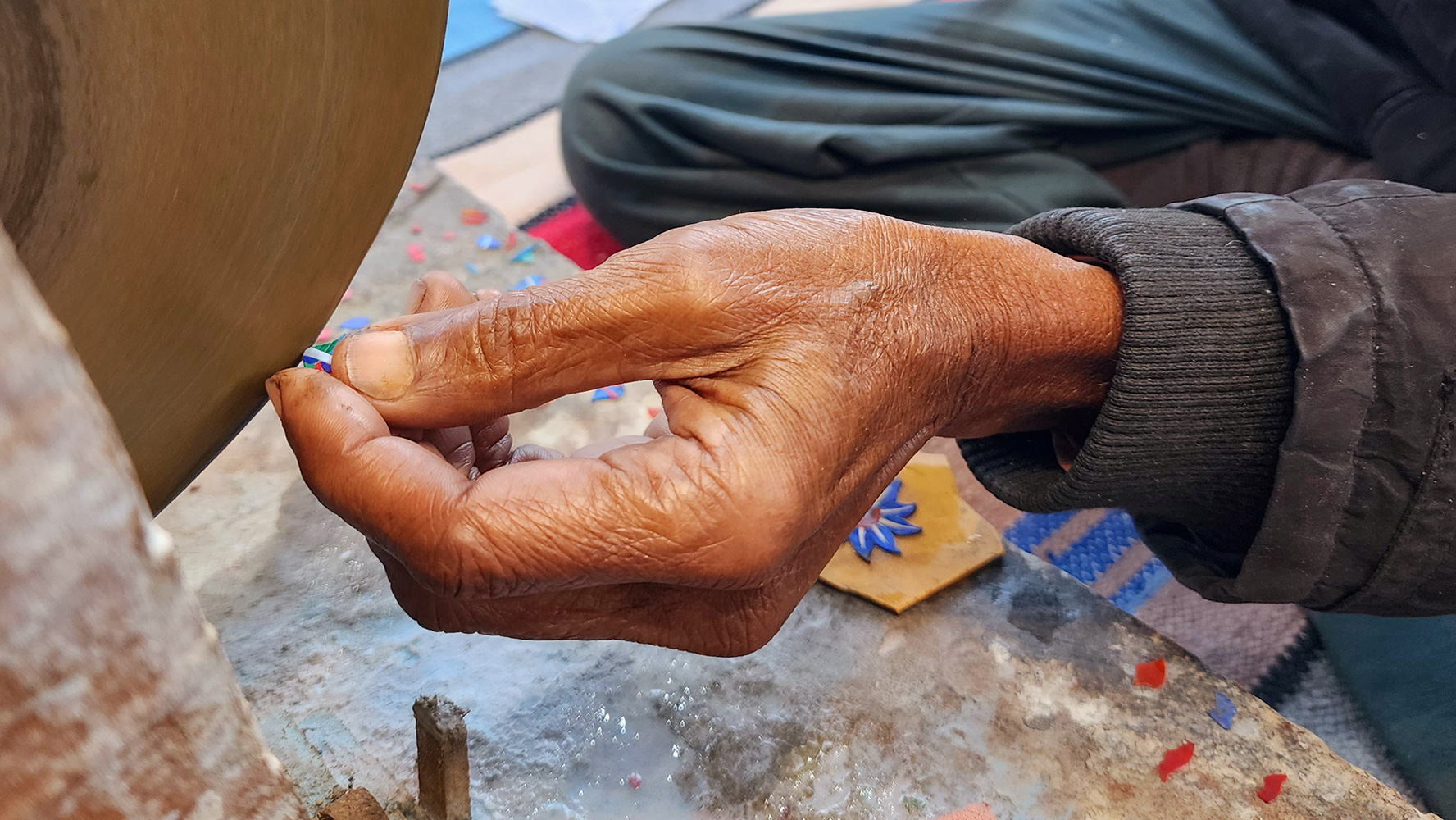
3. Cutting the stones: Pieces of semi-precious colored stones are then hand-cut and shaped on a small shaping wheel to fit perfectly into the carved spaces.
4. Inlaying: The stones are then inlaid into the marble spaces using natural adhesive usually made of a mix of gum and wax.
5. Polishing: Once the stones are set, the surface is polished so fine that it glimmers, and it almost looks like the stones were always an integral part of the marble.
The process is extremely daunting. A single small flower could take about a week to complete. I personally feel that the finesse that the human hands get into this art will be difficult to match by machines as well. It’s absolutely AMAZING.
Pacchikari art in Taj Mahal
While there were many articles and objects that adorned this intricate art, the quintessential masterpiece is the Taj Mahal, which was built in the 17th century. The whole building (mausoleum) proudly shimmers with beautiful designs engraved into it using fine pieces of stones, which were brought in from all over the world. The final piece of art is so precise that it’s hard to believe that it’s human-made. Even now, in Agra, if you trace back a few of the artists, their lineage will trace back to the artisans who worked in the Taj Mahal in places like Taj Ganj, Nai ka Mandi, and Gokul Pura.
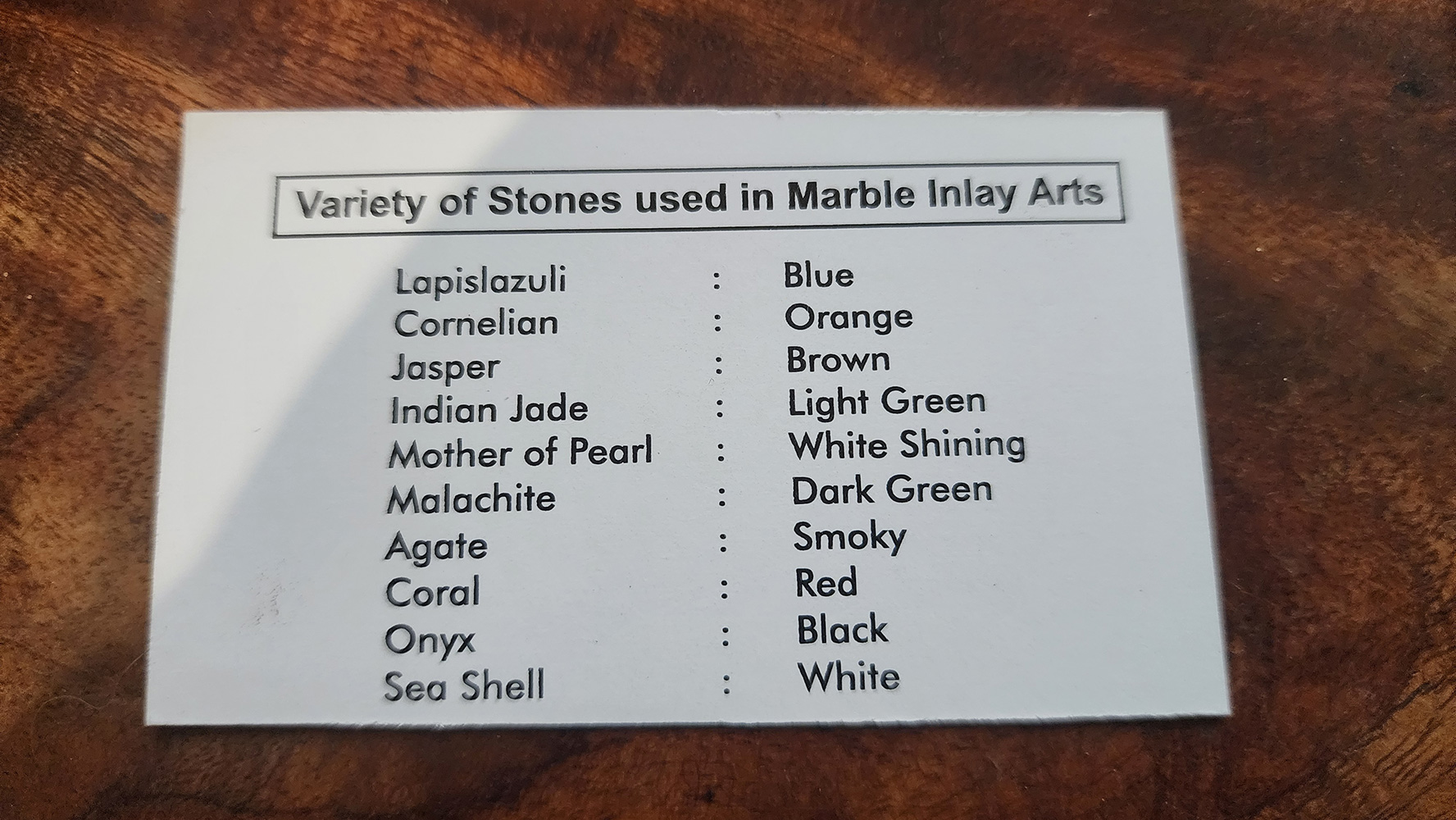
The most usually used materials
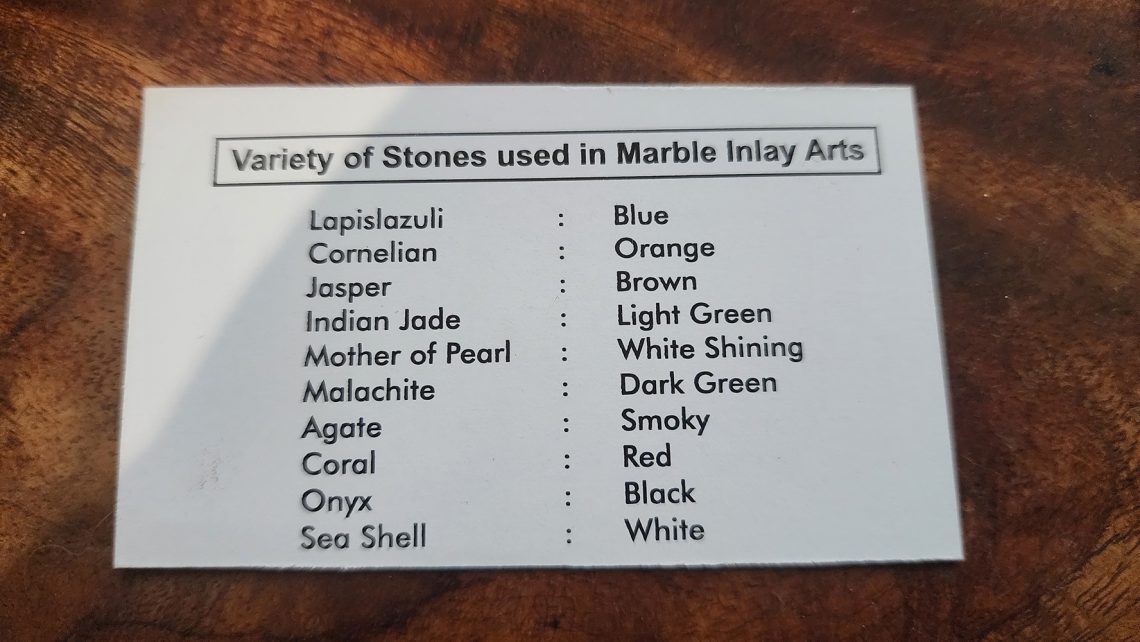
Makrana Marble: The base marble is usually Makrana marble, which is chosen for its soft nature along with its whiteness and its availability in nearby Rajasthan.
Lapis Lazuli: Imported from Afghanistan (especially Badakhshan); prized for its deep blue hue.
Malachite: Brought from Russia and Egypt; known for its rich green color and patterns.
Carnelian (Cornelian): Sourced from Baghdad and Persia (Iran); a translucent orange-red stone.
Mother of Pearl: Imported from the Indian Ocean region and the Bay of Bengal.
Jasper: Obtained from the Punjab region and parts of India; a reddish-brown stone often used in floral motifs.
Turquoise: Brought from Tibet; valued for its sky-blue tones.
Onyx and Agate: Found in Western India and Persia; used for dark outlines and detailing.
Black Marble (Slate): Quarried from Jaipur and Charkoh, used for calligraphic panels.
There were supposedly about 28 types of different stones from around the world that were used in the Taj Mahal.
The craft of Pacchikari in Agra has been awarded a Geographical Indication (GI) tag, helping protect the authenticity of the craft and benefit small artisans.
Preservation
This art form is slowly dying due to low profit margins, a declining number of artisans, and reduced market demand. After the Taj Mahal, this form of art adds up to a must-go reason to go to Agra. There are government-owned centers that are trying their best to preserve the art form and, most importantly, the artists. When you go to Agra, be very careful of scammers. Make sure you find the genuine artists. Your guide will mostly take you to a private run center where things could be fake and highly priced. Honestly, we ourselves do not yet know which one is the best place to pick this up from, and we will surely update this if someone comments here and is verified or we find a trustworthy center ourselves. We did end up in a center which almost looked like a Government owned one where our guide took us but it turned out to be a privately owned one where the prices are quite exorbitant, there is no guarantee that the stones used are genuine and most importantly we cannot confirm if the real artists were benefitting out of it.
For now, we are still awed by the perfection of what these trained human hands can create and hopefully find the genuine source someday to help them whatever little we can.